

 Plastic Pollution and Recycling
Join the global bottle deposit program
Fuelled by the world’s most progressive people.
How to Identify Recyclable Plastics
Take a look at most plastic packaging and you’ll see a small triangle with a number inside.
These are called resin identification codes (RICs), and they classify plastics into seven types (1–7).
But here’s the important part: these numbers don’t guarantee recyclability. They simply tell you what type of plastic it is.
Whether a plastic is actually recycled depends on:
- Local collection systems
- Sorting infrastructure
- Market demand for that material
This is where many well-intentioned efforts fall short.
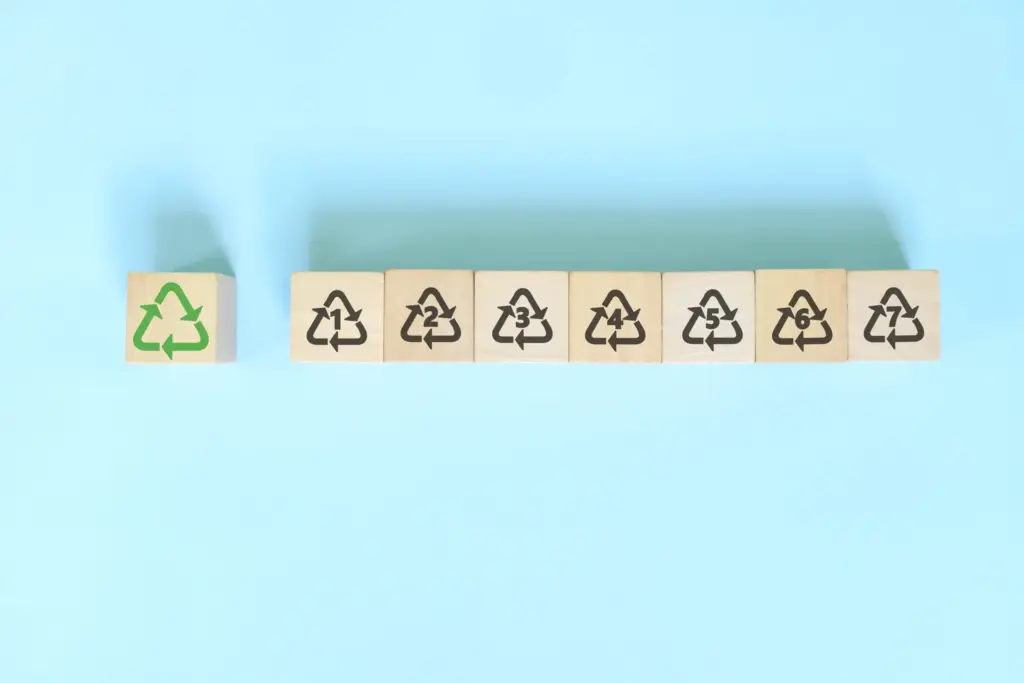
The 7 Types of Plastic (And What You Need to Know)
| Code | Plastic Type | Common Uses | Recyclability |
| 1 | PET (Polyethylene Terephthalate) | Water bottles, soda bottles, food containers | Recyclable; high deman in recycling markets |
| 2 | HDPE (High-Density Polyethylene) | Shampoo bottles, detergent containers, milk jugs | Recyclable; Durable and easy to process |
| 3 | PVC (Polyvinyl Chloride) | Pipes, packaging materials | Difficult to recycle; Contains additives that complicate processing |
| 4 | LDPE (Low-Density Polyethylene) | Plastic bags, wraps, squeezable bottles | Limited recyclability; Often not collected in standard systems |
| 5 | PP (Polypropylene) | Food containers, bottle caps, straws | Recyclable; Acceptance depends on local systems |
| 6 | PS (Polystyrene) | Styrofoam, takeaway containers | Rarely recyclable |
| 7 | Other (Mixed Plastics) | Multi-layer packaging, mixed materials | Limited recyclability; Difficult to separate and process |
What Plastics Are Actually Recyclable in Practice?
While there are seven categories, only a few are consistently recycled at scale:
- PET (No. 1)
- HDPE (No. 2)
- Select PP (No. 5, depending on system)
These plastics are:
- Easier to collect and sort
- More valuable in recycling markets
- More likely to be turned into new products
Plastics like PET and HDPE are considered recyclable because systems exist to collect and process them. PP is emerging as a recyclable material as infrastructure improves.
But many plastics, especially sachets and multi layer packaging, are not recyclable in practice.
This is not about individual behavior, it is about system design.
When materials are created without a viable recovery pathway, they are far more likely to contribute to pollution.
Plastic Bank’s collection communities help address this gap by gathering plastic before they leak into the environment. The material is then processed into Social Plastic, a verified recycled material that can be reused by global brands.